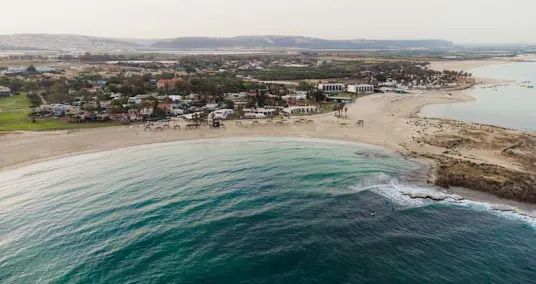
The discovery was made in an ancient shipwreck in the Dor Lagoon near the Carmel Coast, where archaeologists recovered nine pieces of unprocessed iron known as “blooms.”
Researchers from the University of Haifa said Wednesday that an underwater excavation off Israel’s northern Mediterranean coast uncovered what they described as the earliest known cargo of raw iron transported by ship, dating back around 2,600 years, Xinhua reported.
The discovery was made in an ancient shipwreck in the Dor Lagoon near the Carmel Coast, where archaeologists recovered nine pieces of unprocessed iron known as “blooms.” According to the university, the find provides direct evidence of how iron was transported in its earliest commercial stages.
The material was preserved in its original form, having solidified directly in a smelting furnace without undergoing forging or further refinement. Researchers said this distinguishes the cargo from later iron artifacts that typically show signs of shaping or tool-making.
Unlike copper and bronze, which could be melted into liquid form in ancient production processes, iron was heated with charcoal to produce a solid, porous mass. That mass was generally hammered to remove impurities and create denser material suitable for tools and implements.
The recovered blooms showed no indication of that secondary processing stage, suggesting they were transported immediately after production.

Earliest iron shipment discovered in ancient Mediterranean wreck
To determine the age and condition of the cargo, researchers conducted microscopic and chemical analyses.
Radiocarbon dating was also carried out on charred wood embedded in one of the pieces, helping confirm the timeline of the shipment. The findings were published in the journal Heritage Science.
Researchers said the cargo indicates that iron was being moved in raw form from production sites to other locations for further processing, pointing to a level of specialization in ancient manufacturing and trade networks in the Mediterranean.
The University of Haifa said the discovery provides new insight into early iron production and distribution practices in the region.
LATEST POSTS
- 1
 Which Countries Would Suffer Most in a Global Energy Shutdown? This Study Has Answers
 - 2Israel kidnaps PIJ terrorist in covert op. in Hamas-controlled Gaza in pursuit of Ran Gvili
- 3L.A.'s most famous midcentury home, the Stahl House, is on the market for the 1st time, at $11K per square foot: See inside
- 42024 Style: The It-Things You Want in Your Closet
- 5Hyundai Is Keeping the i30 Alive While America Keeps Losing Cars Like It



- Newly discovered link between traumatic brain injury in children and epigenetic changes could help personalize treatment for recovering kids
- There are thousands of aligned holes in Peru. Archaeologists now think they know who made them
- Oil, energy and food: Which countries in Europe are most exposed to higher food prices?
- The Iran war’s energy security legacy
- Looking for a great Thanksgiving side dish recipe? These are the crowd-pleasers the Yahoo team swears by.
- What to know about the "wild, wild West" of viral peptide claims
- 7 Fun Plans to Make Film Evenings Seriously Invigorating (You'll Cherish #5!)
- Gaza Strip sees flooding after heavy rainfall
- ONE returns to Red Sea with new service